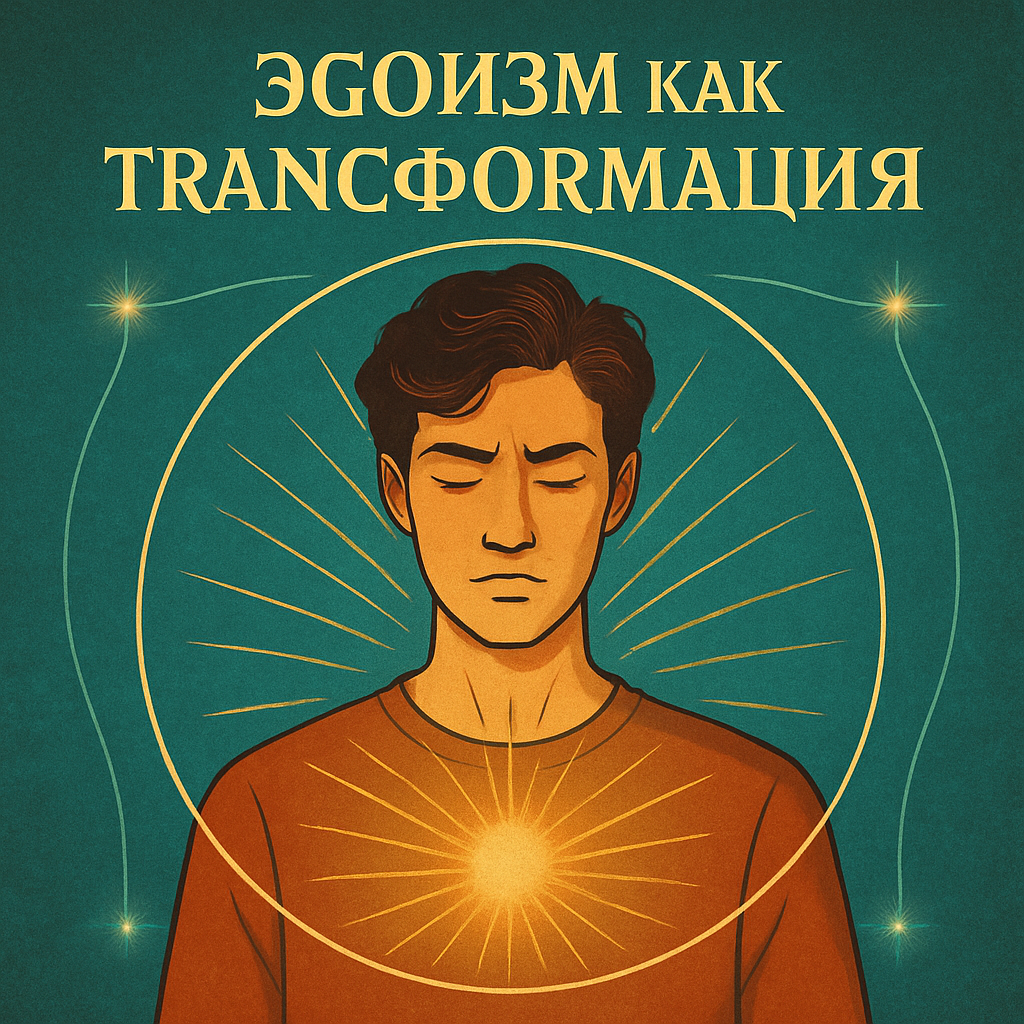
Egoism
Egoism is a distorted manifestation of the personal self that turns a healthy sense of self into destructive behavior. In the concept DREVO egoism is not justified, but is recognized as an internal imbalance that requires attention, maturity and transformation. Working with egoism is a path from blind defense to conscious responsibility, from disunity to harmony.
1. Egoism as a signal of imbalance
Awareness and recognition: Ask yourself:Why do I insist on my own? What am I afraid of losing? Selfishness often indicates a fear of loss, a lack of attention, or unprocessed pain.
Exit from the defensive reaction: Acknowledge your selfish behavior without judging yourself. This is honesty, not weakness. This is the beginning of the journey to maturity.
2. Egoism as a distortion of a healthy ego
Transition to ego: At the core of egoism is a distorted ego. When the ego is developed, a person can take care of himselfwithout prejudice to others.
Personal resource: Create space for restoration: silence, breathing, rituals. Where there is no fuss, the ego stops fighting - and justThere is.
3. Egoism as an obstacle to communication
Influence on relationships: If your actions regularly offend or alienate others, stop. Not out of guilt, but out of a desire to understand:What am I creating with my behavior?
Attention practice: Activate gratitude. Look at others not through the lens of "what's mine," but rather "what's between us." This changes the very energy of interaction.
4. Egoism as a challenge to awareness
Meditation on Reciprocity: Imagine: you and another person are not separate, but like two points connected by a flow. What changes when you experience this?
Transition from “I” to “we”: Practice in dialogue: listen more than you speak. Not for the sake of modesty, but for the sake of depth.
5. Selfishness vs. Healthy Self-Care
Distinction: Egoism takes from fear. The ego acts out of a conscious need.
Balance of "I" and "we": Self-care is not the opposite of altruism, but its foundation. When you are full, you do not lose when you share.
6. Egoism in a team
Conscious presence: Who am I in the group? Am I able tocontributes, notpull? Mindfulness circles help you see your habits and restructure your behavior.
Single Intention: Channel your ambitions into serving the common good. When everyone shines their own light, without overshadowing others, a new light emerges.harmony, not chaos.
7. Egoism as a lesson in maturity
From Illusion to Integrity: Egoism comes from the idea that “I am alone.” Mindfulness reveals:Everything I do to myself, I do to the world.
Service from the center: Help others not at the expense of yourself, butfrom the fullness. This path is not self-sacrifice, but a true manifestation of love.
💠 Conclusion:
Egoism is a distorted impulse to be oneself. If it is realized and transformed, it ceases to destroy and becomesgrowth point. Not for fighting, but for creation. Not for separation, but for communication. Not for control, but for genuine presence.