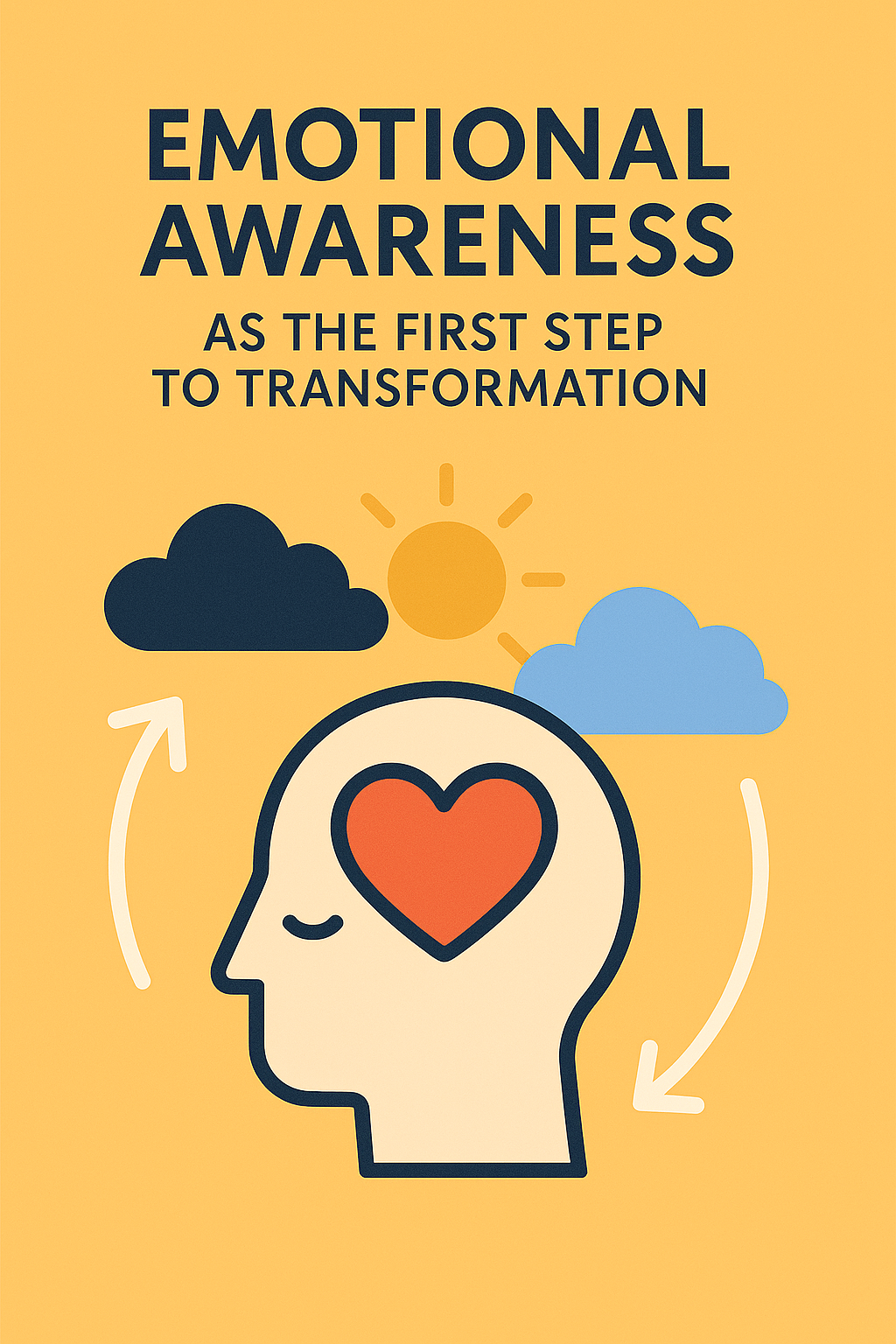
1.3. Awareness of emotions as the first step to transformation 🧠✨
Emotions arenot just reactions, but a powerful source of energy. But if wewe don't realize that they control us, not we control them.
🌀 When emotions are unconscious: 🔹 We are respondingautomatically(anger, resentment, anxiety). 🔹 Feelingscapture us, but do not provide clarity. 🔹 We get intoemotional trapsand we repeat the same mistakes.
⚡ When emotions are recognized: ✅ We understand,where do they come from and why. ✅ We canchoose your reaction rather than act impulsively. ✅ We gainemotional freedom and strength.
💡 The first step to mindfulness is learning to notice your emotions in the moment.
🔍 1. Why is emotional awareness so important?
📌 Awareness gives choice. Once we understand what we feel, we can decide: 👉 How to react to this? 👉 What to do about this? 👉 How to use this for good?
📌 Emotions without awareness are chaos. When we don't notice emotions, they accumulate andbreak through at the most unexpected moment— in the form of breakdowns, stress, irritability.
📌 Conscious emotions = conscious life. We don't suppress emotions, we learnwork with them and transform them into a resource.
🛠 2. How to learn to be aware of your emotions?
🔹 1. STOP-moment practice
📌 How to perform: 1️⃣ Stop andtake a deep breath in and out. 2️⃣ Ask yourself:
"What am I feeling right now?"
"Where in my body do I feel this emotion?" 3️⃣ Observe the emotionwithout condemnation.
💡 Why it works: ✔️ Tearsautomatic emotional reaction. ✔️ Givesclarity instead of chaos.
🔹 2. Emotional Awareness Journal 📖
📌 How to lead: 1️⃣ Write down the situation that caused the emotion. 2️⃣ Describe,what exactly did you feel. 3️⃣ Findthe reason for the emotion(What is the belief behind it?) 4️⃣ Ask yourself:"What can I do about this?"
💡 Why it works: ✔️ Givesdeep understanding of oneself. ✔️ Helpsnotice recurring emotions and the reasons for their occurrence.
📌 Example: 📅 Date:April 10 😡 Emotion:Anger 🎭 Situation:My colleague didn't listen to my advice. ⚡ My reaction:I yelled at him. 💡 Awareness:The anger arose because I felt unheard. It's important to me to be valued.
🔹 3. Practice "Emotional Scanner" 🔍
📌 How to perform: 1️⃣ Close your eyes and dothree deep breaths. 2️⃣ Scan your body:
Where there is a feeling of tension?
Is there any?warmth or cold in some parts of the body?
What emotions?live in your body right now? 3️⃣ Allow emotionsbe, don't try to change it.
💡 Why it works: ✔️ Showswhere in the body do emotions get stuck?. ✔️ Gives you the opportunityexperience the emotion rather than suppress it.
🔄 3. What to do after recognizing an emotion?
📌 Recognizing the emotion is the first step, but what next?
👉 1. Accept it. "I feel it, and it's okay."
👉 2. Understand her message. "What does this emotion tell me?"
👉 3. Choose a conscious response. "How can I use this feeling for good?"
💡 You don't control your emotions, but you control your reaction.
🎯 Summary: 3 steps to emotional awareness
✅ 1. NOTEemotion in the moment. ✅ 2. NAMEher without judgment. ✅ 3. SORT IT OUT, what she wants to say.
📌 Recognizing emotions is the first step to transforming them.
✨ When you become aware of an emotion, it stops controlling you.
🌱 The next step is to learn to transform emotions into power! 🚀💡
🌟 Part 2. Basic emotions and their influence 🎭💡
Emotions arethe key to understanding yourself and the world around youThey show us what's important, help us make decisions, and adapt to different situations.
In this part of the book we will examine the main emotions:their nature, reasons for their occurrence, their influence on our lives and ways of consciously interacting with them.
📌 The purpose of this chapter is: ✅ Understand why we need emotions. ✅ Understand the influence of basic emotions on life and health. ✅ Learn to manage emotions rather than suppress them.
🔹 2.1. What to do if no one understands you 🤷♂️💭
🔸 Why does the feeling of misunderstanding arise? 🔸 How to distinguish the real from the imaginary. 🔸 How to express your thoughts correctly so that you are heard. 🔸 Methods for building trusting relationships.
🔹 2.2. Feelings of Powerlessness: Awareness, Understanding, and Overcoming 🛑💪
🔸 Why do feelings of powerlessness and loss of control arise? 🔸 How to stop being a victim of circumstances. 🔸 Practical steps to regain your strength. 🔸 Exercises to build confidence.
🔹 2.3. How to stop being bullied and ridiculed 🛡️🎭
🔸 The psychology of aggressors and why they choose their victims. 🔸 How to change your behavior to avoid being a target. 🔸 Practices to strengthen confidence and protection. 🔸 How to set personal boundaries.
🔹 2.4. How to cope with feelings of weakness and insecurity 🏋️♂️💪
🔸 Why do we feel weak? 🔸 How to develop self-confidence. 🔸 Methods of internal support. 🔸 Small steps to big results.
🔹 2.5. The feeling of rejection and its transformation ❌➡️✅
🔸 How fear of rejection works. 🔸 Why is it so important for us to be accepted? 🔸 How to learn to feel valuable regardless of other people's opinions. 🔸 Practices for internal stability.
🔹 2.6. A feeling of uncertainty and anxiety🌫️😰
🔸 Why uncertainty causes stress. 🔸 How to accept change and adapt. 🔸 Methods for reducing anxiety. 🔸 How to develop confidence in the face of the unknown.
🔹 2.7. Loneliness: How to Turn It into a Resource 🌌🧘♂️
🔸 Why does the feeling of loneliness arise? 🔸 How to distinguish between beneficial and destructive loneliness. 🔸 How to learn to be comfortable with yourself. 🔸 Using solitude for personal growth.
🔹 2.8. Failure to Meet Expectations: Disappointment and How to Overcome It 😞➡️🌟
🔸 Why expectations don't match reality. 🔸 How to change your approach to avoid disappointment. 🔸 How to benefit from experience. 🔸 Techniques for restructuring thinking.
🔹 2.9. Feelings of injustice and dealing with them ⚖️🔥
🔸 Why does injustice affect us so much? 🔸 How to respond to injustice without destructive emotions. 🔸 How to defend your truth constructively. 🔸 Emotional regulation practices.
🔹 2.10. Resentment and deep emotional wounds 💔🔄
🔸 Why resentment arises and how it destroys us. 🔸 How to stop dwelling on past grievances. 🔸 Methods of forgiveness (without harming yourself). 🔸 Emotional healing practices.
🎭 Summary of this part
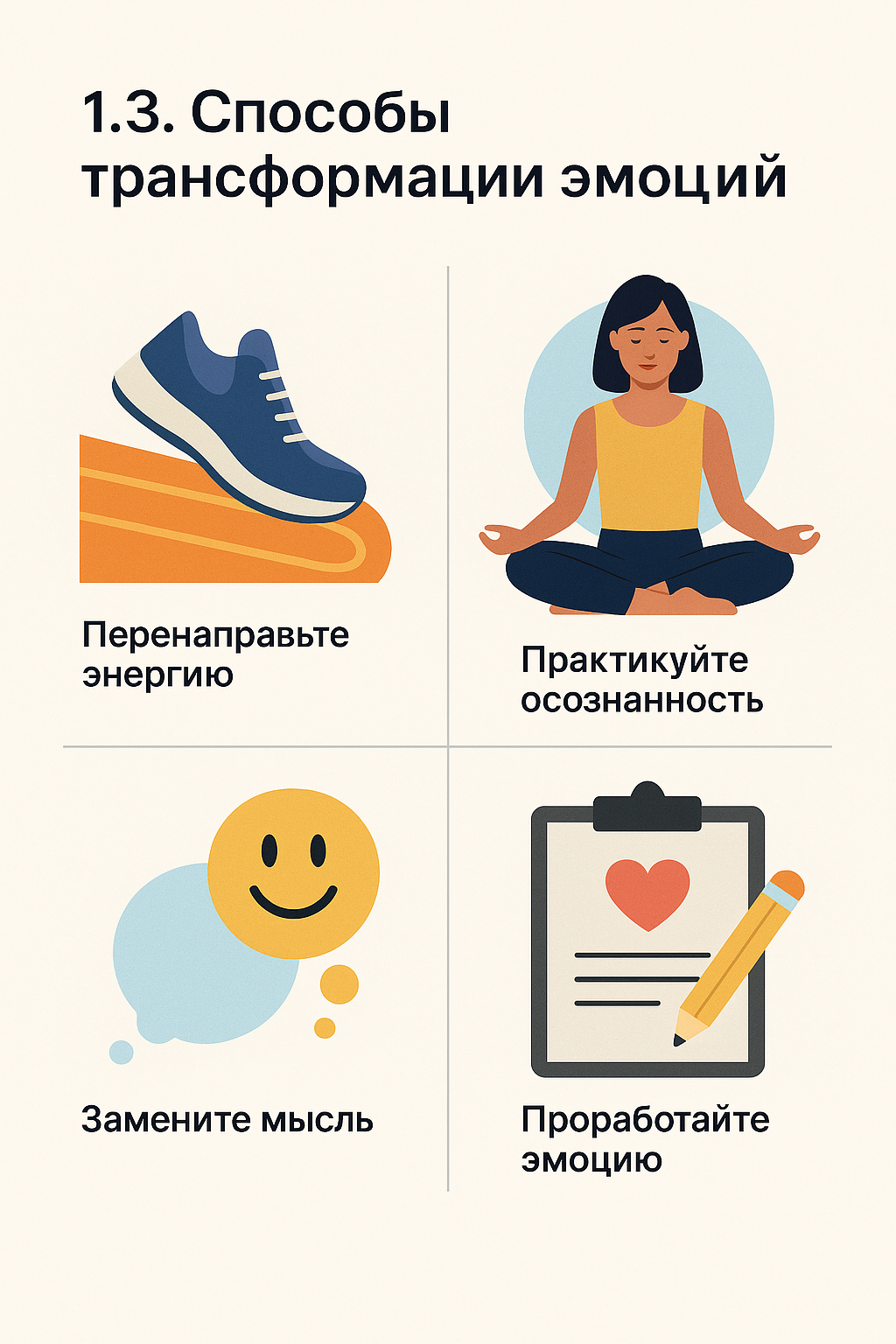
Emotions are not a problem, buta tool for understanding oneself. Important notsuppress them, but learn to interact with them. In the following chapters we will discusspractical techniques for working with emotionsto learndirect them in the right directionand make them allies on the path to a harmonious life.
✨ Let's dive into awareness! ✨ 🚀