Feelings of Powerlessness: How to Recognize, Understand, and Overcome
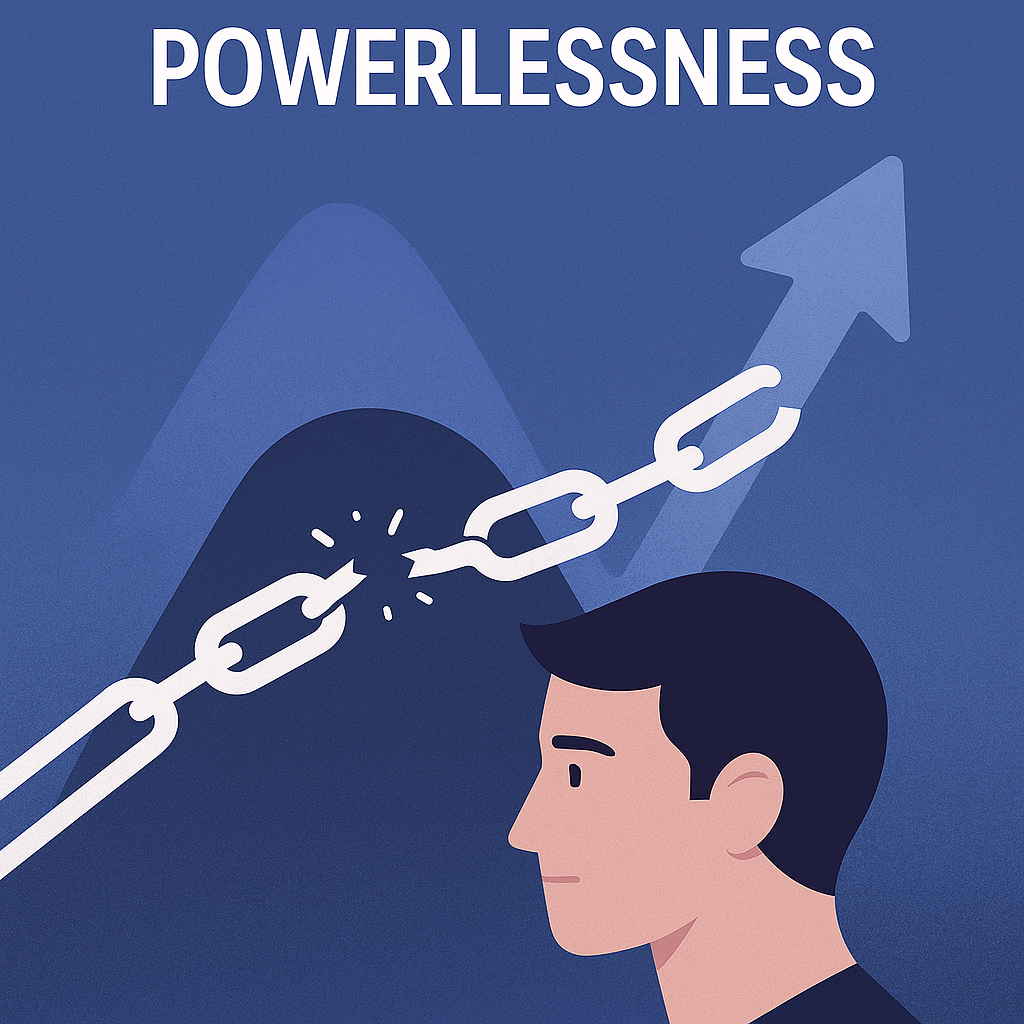
A feeling of powerlessness arises when we face situations that seem beyond our control. It is accompanied by a sense of loss of control, apathy, and sometimes fear of the future. However, even this feeling can be transformed into a source of strength if approached mindfully.
What does a feeling of powerlessness signal?
Loss of control:the situation seems too complicated or unsolvable.
Lack of resources:lack of knowledge, time, energy or support.
Emotional exhaustion:accumulated stress or fatigue leading to apathy.
How to recognize the feeling of powerlessness?
Notice your emotions and thoughts.
What sensations do you feel in your body? (Heaviness, weakness, tension).
What thoughts are repeated?"I can't handle it.", "It's no use.").
Admit your feelings.
Tell yourself:"I feel powerless, and that's normal in this situation."
Separate fact and interpretation.
Fact:the situation seems complicated.
Interpretation:You think you can't handle it.
Practices for dealing with feelings of powerlessness
1. The "Small Steps" Technique
Target:Break a large task into small, manageable steps.
How to perform:
Identify what exactly is causing the feeling of powerlessness.
Break the task down into minimal steps (e.g. do one action).
Focus only on the first step without thinking about the whole task.
Result: A sense of progress and restored confidence.
2. Technique "Change of Focus"
Target:Shift your focus from the problem to what you can control.
How to perform:
Make a list of what depends on you.
Find an action you can take right now (e.g. talk to someone, gather information).
Perform this action.
Result: The feeling of control returns, even if the action is minimal.
3. Practice gratitude
Target:Remind yourself of what you already have and change your perception of the situation.
How to perform:
Write down 3 things you are grateful for right now.
Include even small joys (for example, the warmth of a cup of tea, the support of a friend).
Result: Change of emotional state and restoration of strength.
4. Resource visualization
Target:Use your imagination to restore your inner strength.
How to perform:
Close your eyes and imagine that your powerlessness is a dark stone inside you.
Imagine the stone becoming lighter, smaller and dissolving, leaving room for light.
Feel the light filling you with energy.
Result: Emotional lightness and inner peace.
5. The “One Day at a Time” Method
Target:Focus only on the present moment.
How to perform:
Remind yourself:"I can't change the past and I don't know the future, but I can do something today."
Make a simple plan for the day with one or two tasks.
Do them without being distracted by thoughts about the global problem.
Result: Reduce stress and restore confidence.
How to use feelings of powerlessness as a resource?
Strengthen your connection with yourself:Feeling powerless can reveal where you need rest, support, or a reassessment of your priorities.
Learn to ask for help:This is a chance to understand that not everything needs to be done alone.
Find humility:Realizing that not everything in the world is under our control helps us focus on what's really important.
Folk proverbs about powerlessness
"Where it's thinnest, it breaks."
"Water wears away stone, but slowly."
"Troubles are not eternal, dawn always comes."
"Whoever can't cope on his own, a friend will support him."
"Even strong arms sometimes require rest."
Conclusion
Feeling powerless is a natural response to overload or uncertainty. Rather than fighting it, it's important to acknowledge it, understand the cause, and use it as a signal for action. Small steps, simple practices, and accepting your emotions will help restore confidence, inner strength, and self-belief.